A polished website, a familiar logo and a low price are not proof that a flight, hotel or rental is legitimate. A few independent checks can prevent a costly booking mistake.
Start with the address, not the advertisement
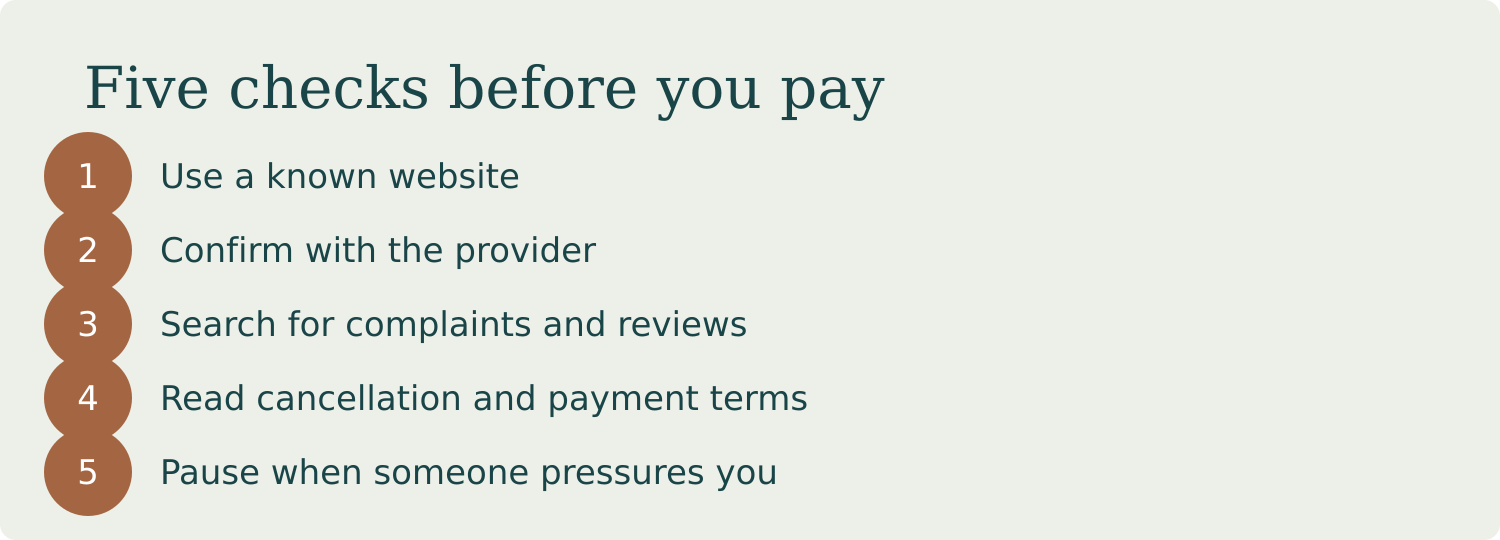
Search ads and social posts can lead to a genuine booking page, but they can also direct travellers to third-party sites or lookalike pages. Before paying, check the web address and confirm who is actually taking the booking. The U.S. Federal Trade Commission’s June 17, 2026 travel-scam alert advises travellers to use a company website or contact detail they already know, rather than trusting a link or phone number in an ad.
Type the company’s address yourself, or find it from a trusted source. Once there, search for the same hotel or flight. A different price does not automatically mean fraud, but a page that cannot be reached through the real company’s site deserves more checking.
Verify the stay outside the listing
For a hotel, call the property using the number on its own website and ask whether the rate and booking reference are valid. For a rental, confirm that the address exists on a map and look for independent reviews that were not supplied by the seller.
Reverse-image search can help when a listing uses attractive photos, but it is only one clue. Photos may be legitimate and still be attached to the wrong property. The stronger test is whether the accommodation, contact person, dates and payment terms all match information from independent sources.
Payment method is part of the test
A request to pay only by wire transfer, cryptocurrency, gift card or person-to-person payment app is a serious warning sign. The FTC says scammers favour methods that make recovering money difficult. Legitimate travel businesses can have their own payment rules, so read them before handing over money and keep records of the offer, confirmation and messages.
Using a credit card does not turn an unsafe booking into a safe one. It can, however, leave a clearer record of the transaction and may offer dispute options under the card issuer’s rules. Check those rules before relying on them.
Do not let a deadline make the decision
“Only two rooms left” or “pay in the next ten minutes” can be real marketing language. It can also be used to stop someone from checking. Treat urgency as a reason to slow down, not as proof that the offer is genuine.
Newer tools can make fake messages, voices and pages look more professional. That changes the appearance of a scam, not the basic test: can the offer be verified independently? A familiar brand name, an impressive image or a convincing message should never be the only evidence.
Check again after you book
A confirmation email is useful, but it is not the final check. Log in through the airline, hotel or rental platform’s own website and look for the booking there. If a hotel is involved, calling a few days after booking can confirm that the reservation is attached to your name and dates.
Keep copies of the confirmation, cancellation terms and payment record in one place. That makes a genuine change easier to manage and gives your bank, card issuer or travel provider clearer information if something goes wrong.
Sources
 Worldtoday.com