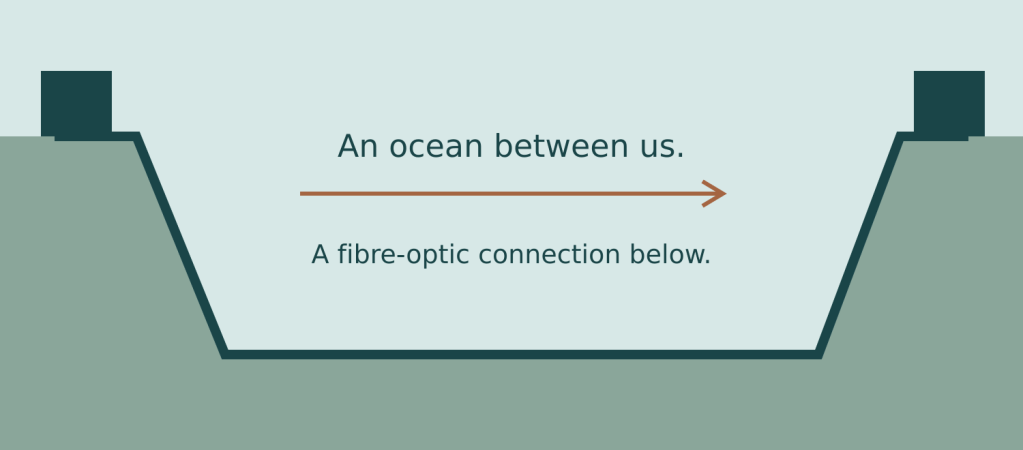
A damaged cable does not automatically switch off the internet. The consequences depend on alternative routes, spare capacity and how quickly the physical connection can be repaired.
The internet has an ocean floor
Wireless connections can make the internet feel weightless. But a message travelling between continents often depends on glass fibres laid across the seabed, carrying information as pulses of light.
TeleGeography’s 2026 overview tracks more than 600 active and planned submarine cables. That figure includes projects not yet operating: a line on a network map is not necessarily usable capacity today. TeleGeography’s cable FAQ
This physical network matters to everyday activities such as accessing overseas websites and communicating with people abroad. Your home connection can be working perfectly while a problem thousands of kilometres away affects the service you are trying to reach.
Why one break may go unnoticed
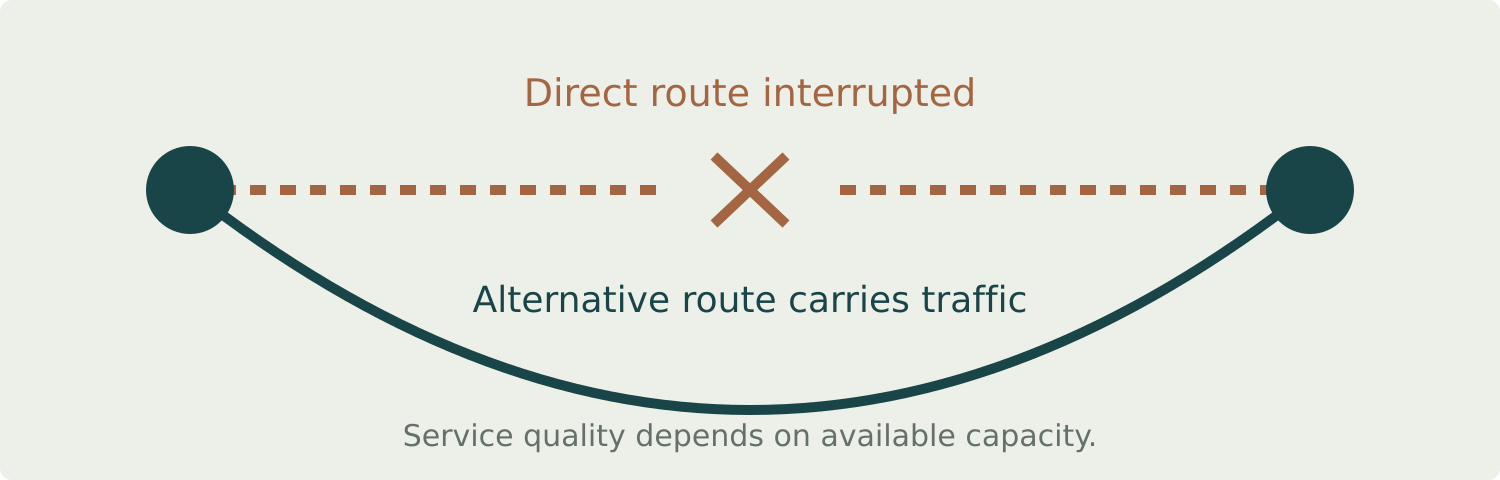
Networks can move traffic onto other connections when a cable fails. The International Cable Protection Committee describes geographically diverse submarine and land routes as important sources of resilience. A cable fault and a complete internet outage are therefore different events. ICPC background and FAQ
Think of a closed bridge. If nearby bridges have enough room, most drivers still reach their destination. If every alternative is already busy, queues grow. For internet traffic, the comparable effects can include slower transfers, longer response times or services becoming unreachable.
The useful question is not simply how many cables serve a country. It is whether those connections offer genuinely separate routes and enough available capacity when something goes wrong. Multiple connections that share the same vulnerable location do not provide the same protection as independent paths.
A broken cable is not proof of sabotage
In a November 29, 2024 announcement, the International Telecommunication Union cited approximately 150–200 cable faults globally each year. It identified fishing, anchoring, natural hazards, abrasion and equipment failure among the causes. This is a historical industry estimate, not a count of incidents in 2026. ITU announcement
Intentional damage is a security concern, but an outage alone cannot establish responsibility. A responsible report should distinguish the confirmed interruption from an operator’s explanation, an official allegation and findings from an investigation.
Restoring service is not the same as repairing it
Rerouting data can restore connectivity before a damaged cable is fixed. Physical repairs require specialist vessels and marine engineering. The ICPC also highlights timely permits as important to maintenance and repair operations. ICPC
This distinction explains apparently conflicting updates: a provider may announce that service has recovered while a repair operation remains unfinished. Customers are receiving data through a different path, rather than through a magically repaired cable.
Can satellites replace the missing connection?
Satellites are useful for connecting remote places and providing alternative access. However, TeleGeography explains that fibre-optic cables carry far more data at lower cost per bit. Satellite connectivity is complementary infrastructure, not a like-for-like substitute for the entire submarine network. TeleGeography
The wider lesson is about preparation. Separate routes, spare capacity and workable repair arrangements determine whether a cable failure becomes a brief inconvenience or a prolonged disruption. The internet’s strength is not that its cables never break; it is that well-designed networks can keep functioning when they do.
 Worldtoday.com