A higher megapixel count can capture more detail, but it does not automatically produce a better photograph. Light, lens quality, focus and image processing all influence the result—and the way you use the picture matters too.
What does a megapixel measure?
A megapixel means one million pixels: the tiny picture elements that make up a digital image. A photograph measuring 6,000 pixels across and 4,000 pixels high contains 24 million pixels, or 24 megapixels.
More pixels provide room to record fine detail. But they do not measure whether the colours look natural, whether a moving subject is sharp or whether the picture captures an interesting moment.
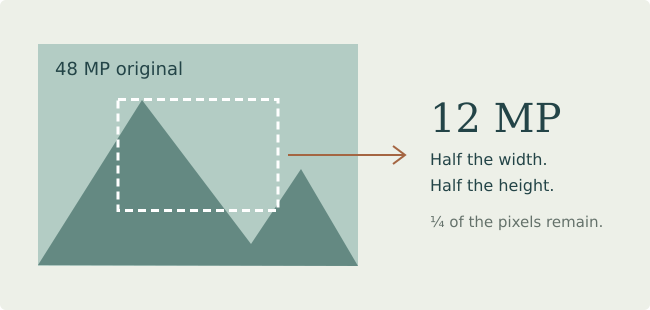
Increasing from 12 to 48 megapixels means four times as many pixels overall, but only twice as many along each edge, assuming the same proportions. It does not make everything “four times sharper.”
When extra megapixels help
Higher resolution is useful when you want to crop a photograph or make a large print.
Imagine photographing a distant building while travelling. Cropping removes the surroundings, but it also discards pixels. Starting with a higher-resolution image can leave more detail in the smaller section you keep.
For example, Sony’s 61-megapixel α7R IV can retain approximately 26.2 megapixels when using its smaller APS-C crop area. That illustrates the practical advantage of spare resolution. Sony camera specifications
For landscapes, architecture and carefully prepared product photographs, those extra pixels can be valuable. For pictures viewed mainly on a phone screen, the difference may be much harder to notice.
Why a bigger number can disappoint
The sensor records the image projected by the lens. If the subject is out of focus, the lens cannot resolve fine detail or the camera moves during exposure, additional pixels cannot restore the missing information.
Lighting matters just as much. Photographing a stationary building in daylight is a different challenge from photographing friends moving around a dim restaurant.
Sensor design also matters. Squeezing more pixels onto a small sensor reduces the area available to each pixel, although improvements in sensor technology and processing can offset some disadvantages. This is why megapixels alone cannot reliably compare a phone with a dedicated camera—or even two different phones.
Why 48 megapixels might become 12
Some smartphone sensors combine information from neighbouring pixels, a technique commonly called pixel binning. The camera trades output resolution for other benefits, particularly in low light.
In its July 23, 2018 announcement of the IMX586 smartphone sensor, Sony described combining signals from four adjacent pixels to produce a 12-megapixel image from a 48-megapixel sensor. The purpose was brighter, lower-noise photography in darker conditions. Implementations vary between devices. Sony’s sensor explanation
A smaller saved image therefore does not necessarily mean the camera is wasting its capabilities. It may be using them differently.
How much resolution do you need?
Start with what you plan to do with the photograph.
A 12-megapixel image measuring 4,000 by 3,000 pixels can produce a roughly 13.3-by-10-inch print at 300 pixels per inch, before cropping. That is a calculation of available resolution, not a guarantee of sharpness.
Higher resolution gives more flexibility for substantial cropping and larger prints. It also generally produces larger files when format and compression settings are comparable.
For everyday travel photos, ask whether faces stay sharp, evening pictures look clean and the camera handles bright skies well. Those observations reveal more than a megapixel label alone.
Before replacing your camera, try cleaning the lens, finding better light and checking focus. A well-timed, clearly composed photograph can be memorable at modest resolution. More megapixels are useful when you need more detail—but detail is only one part of a good picture.
Header illustration: World Today. Conceptual artwork, not a real camera comparison.
 Worldtoday.com